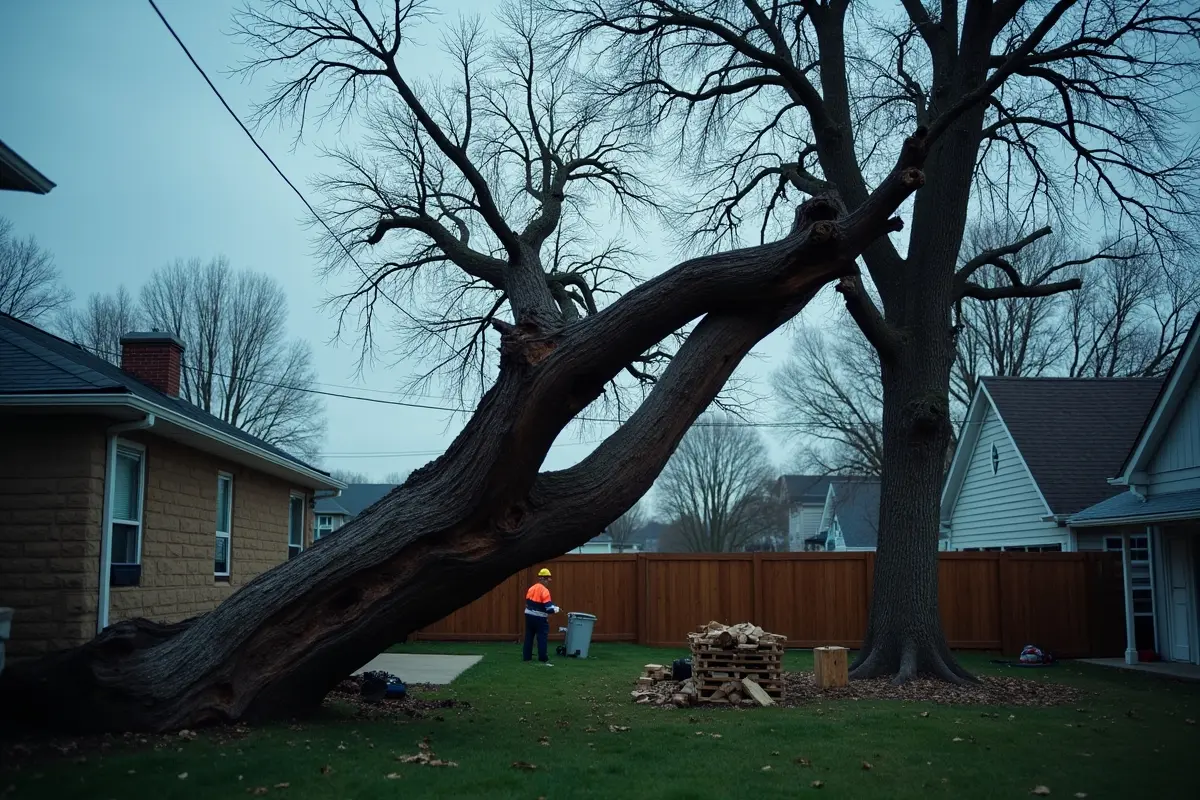
Fuquay-Varina homeowners often value mature trees for shade, privacy, and character, but a tree can become a safety concern when its condition or location changes. When tree removal may be necessary, the right decision should take into account visible defects, recent weather, nearby structures, and the tree’s ability to remain stable.
Removing a tree is not automatically the best response to every broken limb, cavity, or lean. Healthy trees provide meaningful landscape benefits, so the aim is to address avoidable hazards while preserving trees that can reasonably be managed through pruning, monitoring, or professional assessment.
Why Tree Removal Decisions Need Care
Tree risk is not determined by a single feature. A tree’s species, size, structure, root condition, overall health, and distance from people or property all matter. A defect that presents little immediate concern in an open part of a large yard may require faster attention when it is above a driveway, bedroom, sidewalk, deck, or play space.
Warning Signs That a Tree May Be Unsafe
One sign does not always mean a tree must be removed. Several warning signs occurring together, especially after a storm or construction activity, are a reason to keep people out of the area and arrange a closer evaluation.
Conditions Worth Noticing
- A new lean or a lean that has noticeably worsened.
- Fresh cracks in the trunk or major limbs.
- Large dead, broken, or hanging branches.
- Hollow areas, cavities, soft wood, or extensive missing bark.
- Mushrooms or other fungal growth at the trunk base, roots, or trunk.
- Lifted soil, exposed broken roots, or movement around the root plate.
- A thin canopy, widespread dieback, or repeated limb loss.
Routine tree trimming can remove selected dead or damaged branches and, in appropriate cases, improve structure, but it cannot correct every root, trunk, or decay problem. Homeowners should not climb a damaged tree, test a limb’s strength, or use household tools on large overhead branches.
How Storm Damage Changes the Risk
Thunderstorms, saturated ground, strong winds, and winter ice can reveal weaknesses that were not obvious before. After severe weather, inspect from a safe distance for split limbs, fresh trunk cracks, a changed lean, or soil lifting near the base. Keep children, pets, and vehicles outside the possible fall area, and stay well away from a tree that contacts or appears close to a power line.
Guidance on trees and storms notes that large deadwood, cavities, trunk defects, and root problems deserve particular attention. A newly leaning tree or a tree with an uprooting root plate should be treated as an urgent situation rather than a weekend project.
When to Save a Tree Instead of Removing It
Preservation may be reasonable when damage is limited, the trunk and roots appear stable, and the tree is not positioned over a high-use target. Structural pruning can sometimes address weak or crowded branch growth. In other cases, a qualified professional may recommend monitoring, treatment for a manageable health issue, or selective removal of damaged limbs.
A stable, long-standing lean is different from a sudden lean after wind or heavy rain. Similarly, a healthy tree with one damaged branch is different from a tree with decay at the base and large limbs above an occupied area. The decision should focus on likely failure points and the consequences of failure.
How Location Affects Tree Risk
Tree professionals often consider the “target” beneath or beside a tree. Targets include homes, garages, parked vehicles, fences, neighboring structures, patios, pools, sidewalks, roads, and play areas. The same dead tree may call for different timing depending on whether it stands in an unused back corner or beside a frequently used driveway.
Utility lines require extra caution. Do not attempt to prune or remove limbs that are touching, entangled with, or dangerously near electrical lines. Contact the utility provider if a line is involved, and follow emergency instructions when there is an immediate threat.
What a Professional Tree Assessment Includes
A careful assessment looks beyond the most obvious broken branch. It may consider the tree’s size and growing conditions, branch attachments, deadwood, trunk cracks or cavities, root flare, surrounding soil, visible signs of decay, and nearby targets. It should also compare options such as pruning, monitoring, treatment, or removal.
The University of Florida explains that a tree risk assessment can help identify defects such as fungal fruiting bodies, cavities, rapid leans, and root concerns that may not be easy to interpret from the ground. A sound assessment does not promise a risk-free tree, but it can support a more informed decision.
Permits, Property Lines, and Local Rules
Before scheduling major work in Fuquay-Varina, confirm applicable local requirements and review any neighborhood or property agreement that may affect removal. Rules can depend on location, tree size, species, development conditions, or proximity to public areas. If a trunk sits near a property line, clarify ownership and access before work begins.
How to Prepare for Safe Tree Work
- Move vehicles, outdoor furniture, toys, and portable equipment away from the work area.
- Keep children, pets, and visitors out of the site.
- Identify irrigation lines, septic components, buried cables, or other underground features.
- Confirm equipment access and the expected path for lowering branches or trunk sections.
- Discuss debris removal, wood handling, and stump options before work starts.
- Postpone nonemergency work when weather or ground conditions make the site unsafe.
Frequently Asked Questions
Does every dead tree need to be removed?
No. Stability, size, location, and nearby targets affect the decision. A dead tree in a low-use area may be evaluated differently from one that could strike a home or walkway.
Is a leaning tree always dangerous?
No. Some trees grow with a stable lean over many years. A new or worsening lean, especially with disturbed soil or root damage, is more concerning.
Can pruning fix a dangerous tree?
Pruning may reduce weight or remove dead limbs, but it cannot reliably solve severe decay, major trunk cracks, or unstable roots.
Making the Final Decision
The safest choice comes from looking at the whole picture: tree health, structure, recent weather damage, root stability, nearby targets, and local requirements. When the situation is unclear, avoid do-it-yourself cutting and seek a qualified assessment to determine whether monitoring, pruning, treatment, or removal is the appropriate next step.