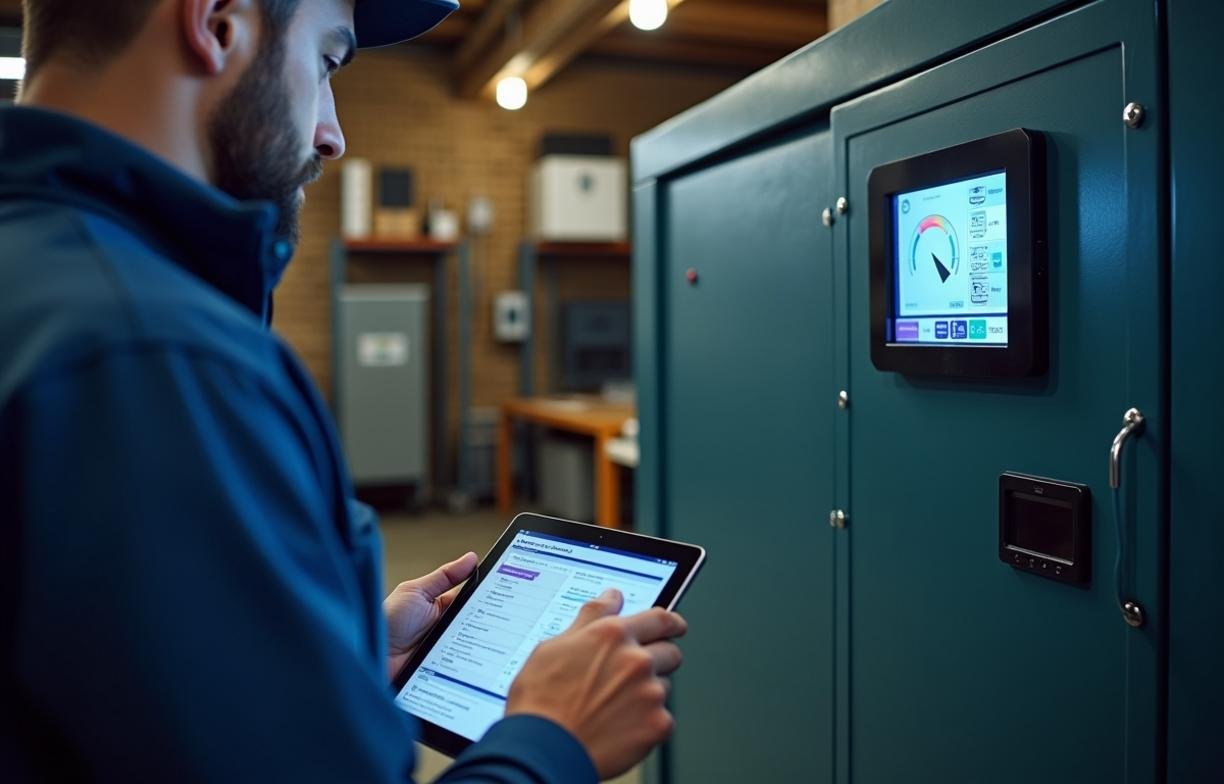
Backup generators are no longer just loud boxes that start during a blackout; many can now communicate with thermostats, transfer switches, batteries, leak sensors, and home automation hubs. That changes how a house responds when utility power fails.
Instead of powering everything blindly, a connected generator can prioritize refrigeration, medical equipment, sump pumps, heat, security, and internet service. The best setup depends on fuel, load size, transfer equipment, and which smart home platform you already use.
What “smart home integration” actually means
Smart integration usually happens through a generator controller, a smart transfer switch, or an energy management module. These devices monitor utility voltage and frequency, then signal the generator to start when power drops outside acceptable limits.
The National Electrical Code, published by the National Fire Protection Association, covers standby systems in Article 702. It requires optional standby systems to be installed so they do not overload the generator or create unsafe backfeed into utility lines. That is why a listed transfer switch is not optional.
Most automatic standby generators start within 10 to 30 seconds after an outage is detected. Many then transfer selected circuits to generator power after voltage stabilizes near 120/240 volts and 60 Hz. Some controllers also run weekly or biweekly self-tests, often lasting 5 to 20 minutes.
Smart features may include app alerts, fault codes, maintenance reminders, load shedding, fuel-level monitoring, and integration with devices such as Ecobee, Honeywell Home, Sense, Savant, or alarm panels. Full integration is usually easier with permanently installed standby units than with portable generators.
The hardware that makes integration work
A generator by itself does not make a smart backup system. The transfer equipment decides when utility power is gone, which circuits receive power, and whether heavy loads should wait.
An automatic transfer switch, often called an ATS, physically separates the home from the utility before generator power enters the panel. This prevents backfeed, which the Occupational Safety and Health Administration identifies as a serious electrocution risk for utility workers restoring damaged lines.
Automatic transfer switches
Residential standby systems commonly use a 100-amp or 200-amp ATS. A 200-amp switch can serve a whole main panel, but that does not mean the generator can run every appliance at once.
Some switches include service entrance ratings, meaning they can serve as the main disconnect. Others must be installed downstream of the existing main breaker. That difference affects panel layout and permitting.
Load management modules
Load management is where smart systems become practical. Air conditioners, electric dryers, well pumps, heat strips, and EV chargers can exceed a generator’s surge capacity if they start together.
A 3-ton central air conditioner may draw roughly 3,500 watts while running but can require two to four times that for startup. Soft-start kits can reduce compressor inrush current, often helping smaller generators handle central air without tripping.
Smart load modules can pause nonessential circuits when generator frequency sags or amperage rises. For example, the system may delay an electric water heater until the refrigerator and well pump finish cycling.
Generator controllers and apps
Brands such as Generac, Kohler, Briggs & Stratton, and Cummins offer controllers with Wi-Fi, cellular, or Ethernet options. App features vary, but common alerts include failed exercise cycle, low oil pressure, overcrank, overspeed, and battery voltage problems.
Cellular monitoring matters in outages that also disable broadband. After major storms, cable internet may fail even when a generator powers the router because neighborhood amplifiers or fiber nodes lost power.
Which setup fits which home?
The right choice depends on outage length, heating fuel, critical loads, and your tolerance for manual setup. A small urban home with rare two-hour outages needs a different system than a rural house with a well, septic pump, and propane heat.
The U.S. Energy Information Administration reports that the average U.S. electricity customer lost about 5.5 hours to power interruptions in 2022, with roughly two of those hours occurring outside major weather events. In storm-prone regions a single outage can run far longer; Hurricane Ian left some Florida customers without power for more than two weeks, which changes fuel and automation needs.
| Situation | Best fit | Why it fits |
|---|---|---|
| Short outages under 6 hours, few critical loads | Portable inverter generator with manual transfer switch | Handles refrigerator, lights, router, and furnace blower without whole-home automation |
| Frequent outages, natural gas available | Automatic standby generator with ATS | Starts without the homeowner present and avoids refueling |
| Rural home with well pump and sump pump | Standby generator with load management | Prevents pump startup surges from overloading the system |
| Smart home with security, cameras, and remote monitoring | Standby unit with cellular monitoring | Sends fault and outage alerts when local internet is down |
| Solar home with battery storage | Hybrid system with battery priority and generator backup | Uses battery for short outages and generator for multi-day events |
If your home has natural gas heat, gas water heating, and no central air requirement during outages, a 10 to 14 kW standby generator may cover essential circuits. A larger all-electric home with heat pumps, electric resistance backup, and an EV charger may need 20 to 26 kW plus load shedding.
A portable generator can integrate modestly with a smart home through a manual transfer switch and smart plugs on backed-up circuits. It will not start automatically unless it is a purpose-built system with approved automatic controls.
Smart home platforms and compatibility limits
Most generator systems do not connect directly to Apple Home, Google Home, or Amazon Alexa for full control. Manufacturers often keep start, stop, and transfer functions inside their own listed controllers for safety and warranty reasons.
That does not mean your smart home is separate. You can still create useful automations based on generator status, utility loss, battery state, or whole-home energy monitoring.
For example, a smart thermostat can switch to a lower power mode when the house is on generator. A smart panel can disable EV charging. A water sensor can trigger sump pump monitoring if a storm is causing both flooding and outages.
Some advanced homes use electrical panels from Span, Schneider Electric, or Leviton to prioritize circuits digitally. These panels can show circuit-level consumption and shed loads based on available power. Installation often makes sense during a panel upgrade, where installed prices commonly range from $3,500 to $8,000.
Do not rely on consumer smart plugs to control hardwired life-safety loads. Sump pumps, furnaces, refrigerators, and medical circuits should be connected through code-compliant wiring and properly rated breakers.
Fuel, runtime, and maintenance details that matter
Natural gas offers the least homeowner involvement because it does not require on-site refueling. The tradeoff is that output can be lower on natural gas than on propane for the same generator model.
Propane stores well and is common where gas mains are unavailable. A 500-gallon propane tank holds about 400 usable gallons when filled to the standard 80% limit, because propane needs expansion space. A 20 kW generator under heavy load can use roughly 2 to 3 gallons per hour.
Diesel standby units are more common in commercial settings, but some homes use them for high-load applications. Diesel fuel can degrade within 6 to 12 months without treatment, according to guidance commonly referenced by fuel suppliers and engine manufacturers.
Maintenance is not only an engine issue. Generator batteries often fail before the engine does, especially in outdoor enclosures exposed to heat and cold. Many standby units use a 12-volt starting battery that should be tested during annual service.
Oil-change intervals vary by model, but many air-cooled residential standby units call for service after the first 25 hours and then every 100 to 200 operating hours. During a four-day outage, a generator running continuously can accumulate 96 hours.
Safety, permits, and placement
Generator placement is one of the easiest places to make a dangerous mistake. The Consumer Product Safety Commission warns that portable generators must be kept outside and at least 20 feet from doors, windows, and vents to reduce carbon monoxide risk.
Standby generators also produce exhaust, although they are permanently installed. Local codes often require clearances from openings, property lines, gas meters, air conditioners, and combustible walls. Manufacturer installation manuals may require 18 inches from the back side and 3 to 5 feet on service or exhaust sides, depending on model.
A permit is usually needed for electrical work, gas piping, and sometimes zoning. Inspectors will look for a listed transfer switch, proper conductor sizing, grounding and bonding, gas pipe capacity, and working carbon monoxide alarms.
Noise can affect placement too. Many residential standby units operate around 60 to 70 dB(A) at 23 feet during normal load. That is roughly conversation-to-vacuum-cleaner range, but sound reflects off fences, walls, and narrow side yards.
Questions to ask before buying
Start with loads, not generator size. List the circuits you need during a 24-hour outage: refrigerator, freezer, furnace blower, boiler controls, well pump, sump pump, garage door, router, lighting, and medical devices.
Then identify high-startup loads. Well pumps, central air compressors, sewage ejector pumps, and heat pumps can require much more power for a fraction of a second than they use while running.
Ask whether the system can send alerts without home internet. If you travel often, cellular monitoring is worth considering because a failed weekly exercise test may be the first sign of a weak battery or fuel issue.
Finally, ask your installer for a written load calculation, transfer switch model number, fuel consumption estimate at 50% load, and the exact circuits that will be backed up. Those four details reveal more than a brochure’s maximum kilowatt rating.