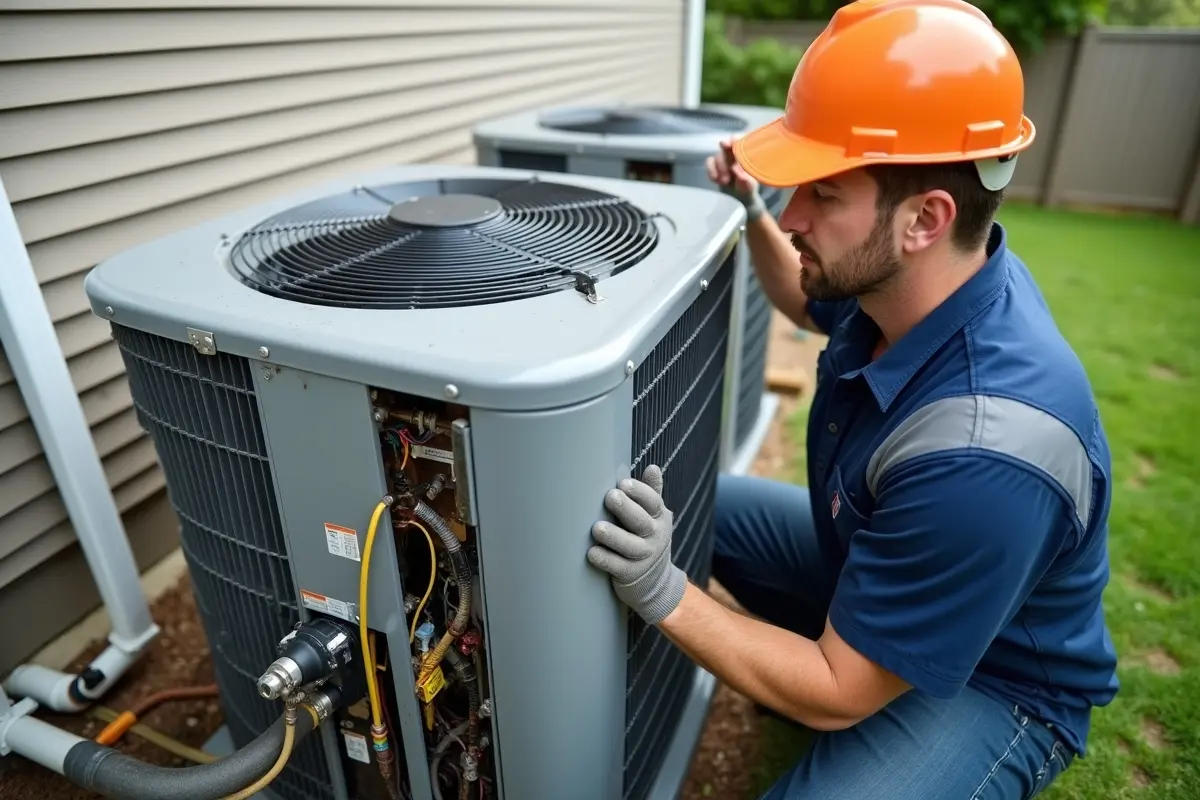
Air conditioning systems that perform poorly, break down frequently, or consume excessive energy often have nothing wrong with the equipment itself – AC problems stem from how they were installed. An expensive, high-efficiency unit installed incorrectly will underperform a mid-range system installed properly.
Most homeowners don’t realize how much installation quality affects long-term performance because problems from poor installation don’t always appear immediately.
They emerge months or years later as reduced cooling capacity, higher energy bills, frequent repairs, or premature system failure. Understanding common installation mistakes helps homeowners recognize warning signs and appreciate why installation quality matters as much as equipment quality.
Contents
- 1 Incorrect System Sizing Creates Ongoing Issues
- 2 Improper Refrigerant Charge Affects Everything
- 3 Airflow Problems From Ductwork Issues
- 4 Drain Line Installation Shortcuts
- 5 Electrical Connection Problems
- 6 Location and Positioning Errors
- 7 Improper Thermostat Installation
- 8 Skipped Commissioning and Testing
Incorrect System Sizing Creates Ongoing Issues
The most consequential installation mistake involves sizing – choosing equipment capacity that doesn’t match the actual cooling load. Oversized systems cycle on and off frequently, never running long enough to properly dehumidify air or operate efficiently. The house might feel cold but clammy, and energy consumption stays high because the system wastes electricity with constant starts and stops. Undersized systems run continuously without adequately cooling the space, struggling through hot weather and wearing out faster from overwork.
Proper sizing requires load calculations that account for square footage, insulation quality, window area and orientation, ceiling height, number of occupants, and heat-generating appliances. Installers taking shortcuts skip these calculations and just install whatever capacity seems about right based on square footage alone. This crude approach commonly results in systems that are 20-40% oversized, creating problems that persist throughout the system’s life.
The financial impact extends beyond just energy waste. Oversized systems cost more to purchase and install. They cycle more frequently, wearing components faster and requiring more frequent repairs. They remove less humidity, potentially creating comfort issues and mold problems. All these consequences trace back to an installation decision made before the system ever operated.
Improper Refrigerant Charge Affects Everything
Air conditioning systems contain specific amounts of refrigerant carefully matched to their design. Too much or too little refrigerant degrades performance, reduces efficiency, and can damage the compressor – the most expensive component. Proper charging requires measuring system pressures and temperatures under operating conditions, then adjusting refrigerant levels to match manufacturer specifications exactly.
Installers rushing through jobs might charge systems by weight alone without verifying proper levels through measurement. They might not account for line set length or ambient conditions that affect optimal charge. Some add extra refrigerant “just to be safe,” creating overcharge problems that reduce capacity and efficiency while stressing the compressor.
Refrigerant issues often don’t become obvious immediately. The system might cool adequately at first but struggle as temperatures rise. Energy bills climb gradually. The compressor works harder than designed, slowly degrading until it fails prematurely. When this happens years after installation, homeowners blame equipment quality rather than recognizing the installation error that caused the failure.
Airflow Problems From Ductwork Issues
Proper airflow through the system and ductwork is critical for efficient operation and adequate cooling. Restrictions in airflow force the system to work harder, reduce cooling capacity, cause frozen coils, and stress the compressor. These airflow problems often originate from installation mistakes involving ductwork.
Undersized ducts restrict airflow no matter how good the equipment. Poorly sealed duct joints leak conditioned air into attics, crawlspaces, or wall cavities rather than delivering it to living spaces. Crushed or kinked flex duct reduces airflow through those sections. Filters installed backward or return air registers blocked by furniture create restrictions installers should have caught.
Return air requirements get particularly neglected. Systems need adequate return air to operate properly, but installers sometimes provide insufficient return ducts or place returns in poor locations. The system struggles to pull enough air, creating negative pressure that reduces efficiency and comfort. Professional services providing Air Conditioning Installation Canberra properties should verify proper airflow throughout the system during commissioning, catching and correcting these issues before they cause years of performance problems.
Drain Line Installation Shortcuts
Air conditioning removes humidity from air, producing condensate that must drain away properly. The drain system seems simple – just a pipe carrying water away – but installation mistakes create recurring problems. Drain lines without proper slope allow water to pool, creating breeding grounds for algae and mold that eventually clog the drain. Drain lines without traps allow sewer gases to enter the home through the AC system.
Condensate pumps required for upward drainage need proper installation and accessibility for maintenance. Pumps installed in tight spaces become difficult to service. Pumps without backup switches or alarms fail silently, causing water damage before anyone notices. These problems could have been prevented through proper installation but instead become recurring maintenance issues or cause property damage.
Electrical Connection Problems
Air conditioning systems require proper electrical service – correctly sized wire, appropriate breakers, and secure connections. Undersized wire causes voltage drop that reduces system performance and can overheat, creating fire hazards. Loose connections create resistance that wastes energy and can arc, damaging components or starting fires.
Some installers reuse existing electrical circuits rather than installing proper dedicated circuits. The AC shares power with other loads, causing voltage fluctuations that affect performance. Circuit breakers trip repeatedly. The system experiences power quality issues that shorten component life. These electrical shortcuts save installation time but create ongoing problems and safety risks.
Location and Positioning Errors
Where installers place indoor and outdoor units affects performance, maintenance access, and longevity. Outdoor units placed where they receive direct sun all day operate less efficiently than shaded units. Units installed too close to walls lack adequate airflow. Units placed on unstable surfaces settle unevenly over time, potentially damaging refrigerant lines.
Indoor units installed without proper clearance become difficult to service. Filters can’t be changed easily. Coils can’t be cleaned without major disassembly. These accessibility issues mean maintenance gets skipped, accelerating system deterioration. What seemed like a space-saving installation choice creates lifetime maintenance complications.
Outdoor units positioned where noise affects bedrooms or outdoor living spaces create complaints installers should have anticipated. Units placed where landscape plants grow into them require constant trimming or suffer reduced airflow. These placement decisions, made quickly during installation, affect homeowner satisfaction for the entire system life.
Improper Thermostat Installation
Thermostats need to sense room temperature accurately to control systems properly. Installing thermostats on exterior walls, near heat sources, in direct sunlight, or in rarely-used rooms causes control problems. The thermostat thinks the house is warmer or cooler than occupied spaces actually are, resulting in overcooling, undercooling, or excessive cycling.
Thermostat wiring errors create control malfunctions that seem like system problems. Incorrectly configured thermostats don’t operate systems as intended. Smart thermostats improperly set up don’t communicate with equipment correctly. These installation errors create ongoing frustration that homeowners blame on equipment rather than installation quality.
Skipped Commissioning and Testing
Proper installation concludes with comprehensive testing and adjustment – verifying all functions operate correctly, checking temperatures and pressures throughout the system, testing safety controls, measuring airflow, and documenting performance. This commissioning process catches installation errors before the installer leaves.
Installers skipping commissioning leave problems undiscovered. The homeowner doesn’t know the system isn’t performing as designed because they have no baseline for comparison. Problems that could have been corrected immediately during installation become warranty claims months later or undiagnosed performance issues that persist for years.
The gap between proper installation and minimum-effort installation creates performance differences that dwarf differences between equipment brands or models. Homeowners investing in air conditioning deserve installation quality that allows their equipment to perform as designed rather than installation shortcuts that guarantee years of problems regardless of how good the equipment might have been. The money saved hiring the cheapest installer gets spent many times over dealing with the consequences of poor installation quality.